

Shutters vs Blinds — Which Is Right for Your Home?
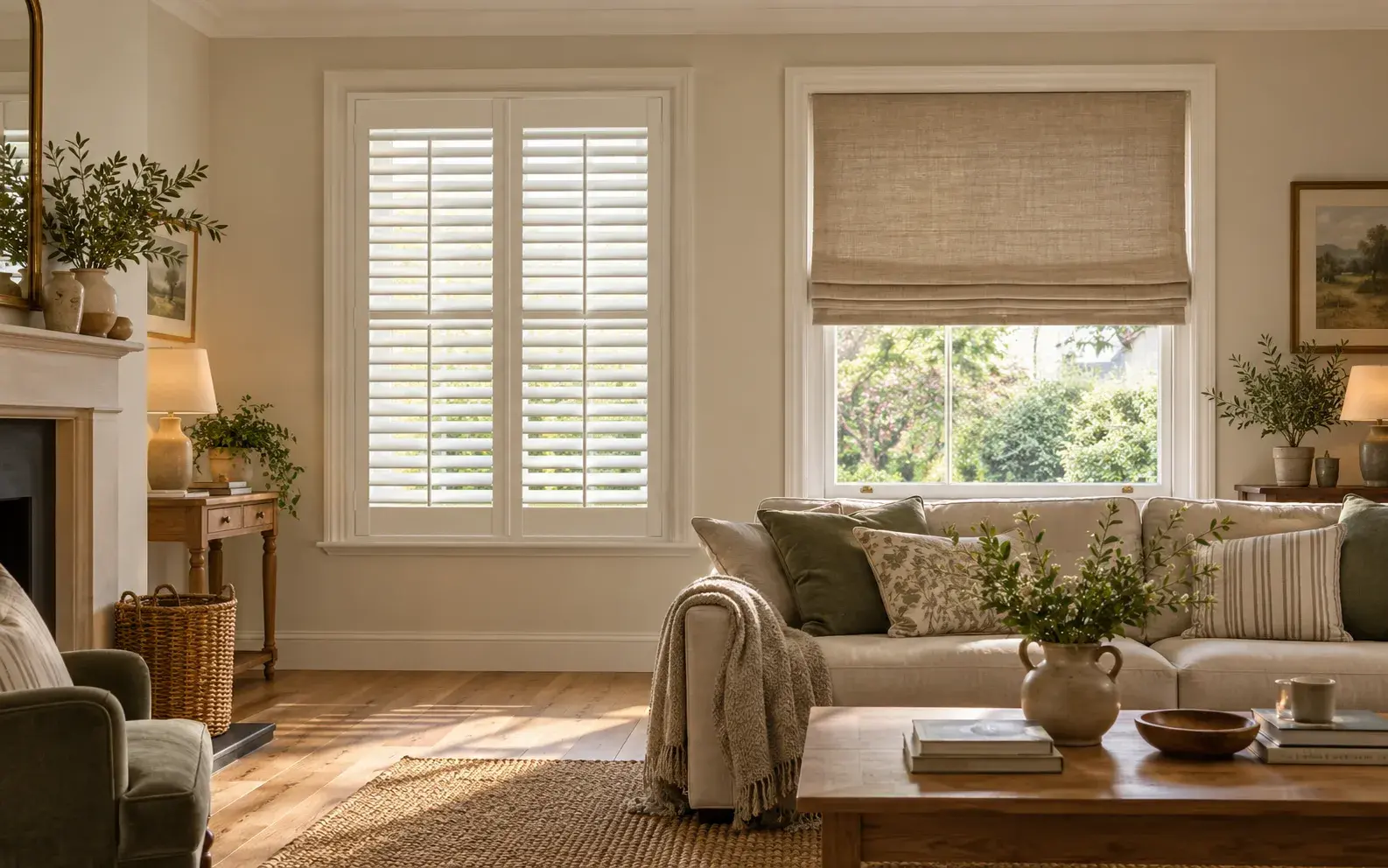
One of the most common questions we hear during home consultations is whether to go for shutters or blinds. Both are excellent window treatments — but they serve different purposes, suit different budgets and create very different aesthetics. This guide walks you through the key differences honestly so you can decide which is right for your home.
Shutters are a solid, architectural window treatment made from real wood, composite or PVC. They are custom-built to fit the exact dimensions of your window and are permanently fixed to the window frame or surrounding wall. The adjustable louvres allow you to control light and airflow with precision, and when closed they provide excellent insulation and complete privacy. They are typically the higher-investment option, but they last the lifetime of the home and add genuine value to your property.
Blinds cover a wide range of styles — roller blinds, venetian blinds, vertical blinds, pleated blinds, Roman blinds and more. They are fabric or slatted window coverings that are fitted inside or outside the window recess and can be raised, lowered or tilted depending on the style. Blinds tend to be lighter, more varied in colour and pattern, and more budget-friendly than shutters. They suit almost every room and every window type.
The cost difference is significant. A set of shutters for a standard window might cost two to four times more than a quality blind for the same window. Shutters are a long-term investment. Blinds offer excellent value and can be refreshed more easily if your tastes change or you redecorate.
In terms of appearance, shutters create a clean, architectural look that becomes part of the building. They suit period homes, modern builds and everything in between. Blinds offer far more variety — thousands of fabrics, patterns, textures and colours. If you want a specific colour to match your décor, or a bold pattern to make a statement, blinds give you that flexibility.
For light control, both are excellent — but in different ways. Shutters give you louvre tilt control, allowing you to angle slats precisely. Blinds like venetians offer similar tilt control, while roller and Roman blinds are either open or closed. For thermal insulation, shutters outperform most blinds due to the solid panel construction creating an air barrier. Honeycomb pleated blinds are the exception, offering excellent insulation through their cellular structure.
Maintenance is minimal for both. Shutters need a wipe with a damp cloth. Blinds need occasional dusting or vacuuming. Shutters win on longevity — twenty to thirty years or more is typical, while blinds might last eight to fifteen years depending on the product and how well they are maintained. For child safety, shutters have no cords or chains, making them inherently child-safe. Most modern blinds are also available in child-safe formats with wand controls or motorisation.
Some rooms suit shutters particularly well. Living rooms, bay windows, front-facing windows, bedrooms where blackout and insulation matter, and bathrooms where PVC or composite shutters handle moisture beautifully. Other rooms are better suited to blinds. Kitchens where a wipe-clean roller is more practical, conservatories with complex roof and side windows, home offices, and children's rooms where a fun fabric adds personality.
Can you have both? Absolutely. Many of our customers choose shutters for the front rooms and key living spaces, then blinds for bedrooms, kitchens and utility areas. There is no rule that says you must choose one or the other throughout the home.
Our honest recommendation is this: if budget allows, shutters are the best long-term investment for your main living spaces. If you want variety, flexibility and excellent value across the whole home, blinds are the smart choice. And if you want the best of both, combine them. We can help you plan a whole-house approach that balances aesthetics, function and budget.
Need help choosing the right window treatment?
Book a Free Home Visit