Roof Lantern Blinds — Specialist Control for Overhead Glazing
Made to measure blinds for the raised glazed roof structure found in kitchen extensions, dining areas and open-plan living spaces, fitted individually to each glazing facet. Supplied and fitted across Milton Keynes, Bedford and Luton.
What Is a Roof Lantern Blind?
A roof lantern is a raised, glazed roof structure — typically box-shaped or pyramid-shaped — set into a flat or near-flat extension roof to bring in light from multiple angles. They are increasingly common in kitchen extensions, dining areas and open-plan living spaces.
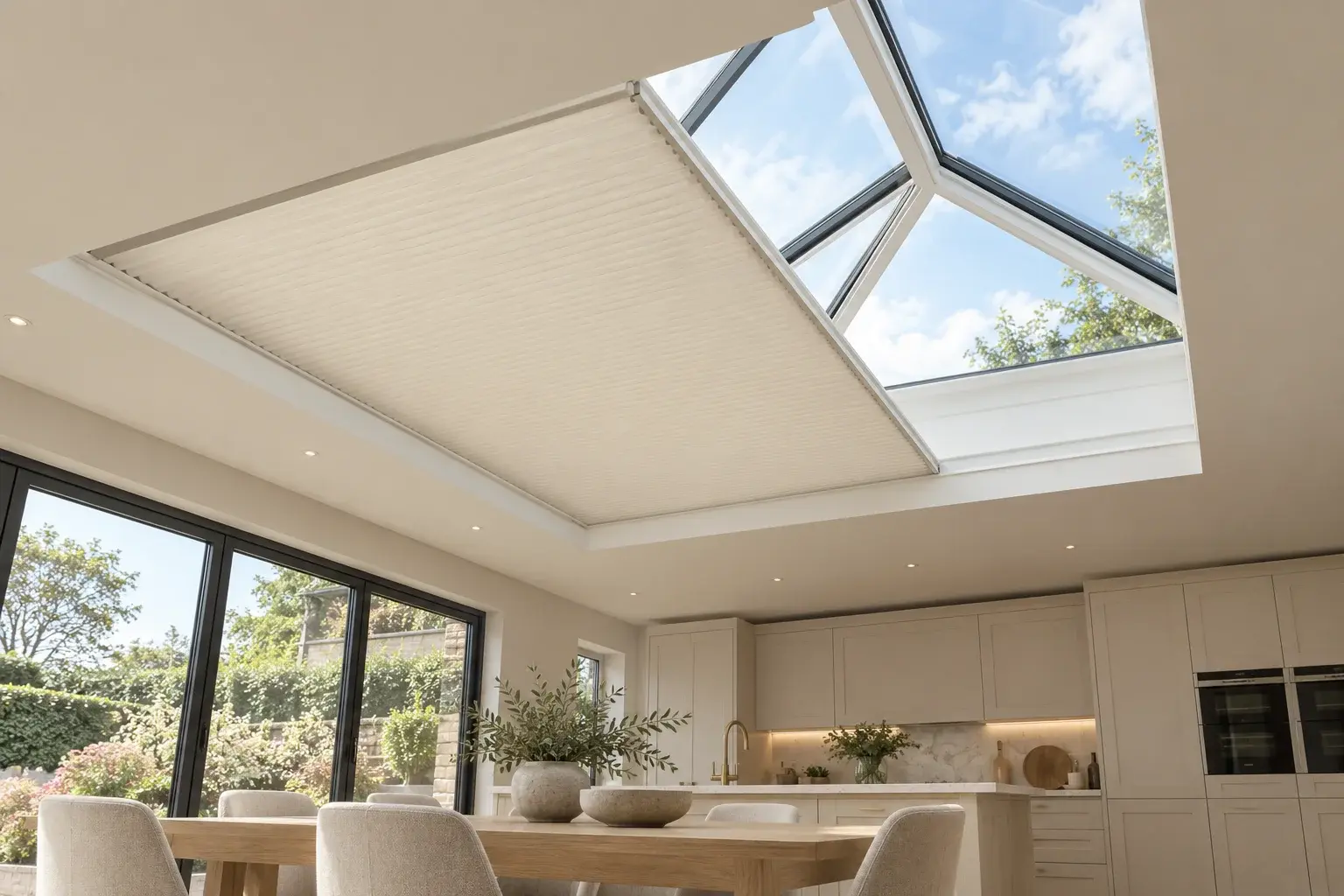
A roof lantern blind is a specialist blind system installed to control that glazed opening. Rather than a single blind across the whole structure, a system is made to measure and fitted individually to each glazing facet of the lantern, so light and glare can be managed facet by facet.
Why Roof Lantern Glazing Needs a Specialist Solution
A roof lantern is a genuinely different application to a standard window, and needs a different kind of product.
Multiple Angled Facets
A roof lantern is made up of several glazing facets, often set at different angles from near-vertical to near-flat. Each facet is measured and fitted individually rather than being covered by a single blind.
Overhead Position
Roof lanterns sit above head height, so hand operation of an ordinary blind is often impractical. Specialist systems are designed for this position, and motorised operation is available on selected compatible systems.
Not a Standard Domestic Blind
An ordinary free-hanging blind is not designed to be fitted sideways or overhead. Roof lantern glazing needs a specialist tensioned system built for the angle and position of each facet, not a standard blind adapted after the fact.
A Different System to Perfect Fit® or Roller
Roof lantern blinds are not the same product as Perfect Fit® blinds, ordinary roller blinds, skylight cassette blinds, or conservatory side-window blinds. Each is built for a different kind of opening.

Light, Glare & Solar Gain
Appropriate blinds and fabrics can help manage solar gain, glare and comfort. The effect varies with glazing, orientation, blind type, fabric and how much of the glazing is covered — your surveyor will discuss what is realistic for your specific lantern.
Depending on the system and fabric chosen, a roof lantern blind may help with:
- Controlling direct sunlight through overhead glazing
- Reducing glare on the room below
- Managing solar gain, alongside the glazing itself
- Reducing incoming light when required
- Providing an additional insulating layer where suitable cellular fabrics are used
- Making high-level glazing easier to control, where motorised operation is available
We do not promise guaranteed cooling, a fixed temperature reduction, guaranteed energy savings, or complete elimination of solar gain. Thermal results depend on glazing, orientation, fabric, blind construction and how much of the glazing is covered.
Light-Filtering vs Blockout Fabrics
Light Filtering — softens and diffuses incoming light without blocking it, reducing glare while keeping the room naturally lit.
Blockout Cellular — significantly reduces the amount of light passing through the fabric itself, for a greater degree of light reduction than light filtering fabric.
Solar Reflective — used on some conservatory and roof glazing applications to help reduce heat build-up; whether a solar reflective option is available for your specific lantern system is confirmed at survey.
Blockout fabric is not automatically the same as a total-blackout installation — some light may still enter around system or perimeter interfaces depending on the construction. If complete blackout is essential, our dedicated Blackout Blinds page explains the specialist system built specifically for that requirement.
Cellular Construction & Insulation
Roof lantern blinds are most commonly specialist pleated, cellular-type tensioned systems, held taut between fixings on each glazing facet so the fabric stays in position regardless of the angle. Cellular fabric can create an additional insulating layer beneath the glazing, helping reduce heat transfer compared with uncovered glazing.
This is a specialist tensioned system, not an ordinary free-hanging domestic blind — an ordinary blind is not designed to be fitted sideways or overhead.
Motorised Operation
Motorised operation is available on selected compatible roof lantern blind systems, subject to size, fabric and system specification. It is especially useful for this application, because normal hand operation of overhead glazing can be impractical or impossible to reach safely.
Motorisation is not fitted as standard, not every system uses the same motor, and not every system uses the same power supply — manual operation remains available on suitable systems, and your surveyor will confirm what applies to your specification.
Control & Power Options
Control options depend on the selected system. Compatible motorised systems may offer handheld remote control, multi-channel control, app or hub control, or selected automation and smart-home integration — confirmed during consultation. We do not guarantee smart-home compatibility across every motorised system.
Motorised systems may use different power arrangements — depending on the product specification, this can include rechargeable battery or mains/hardwired options. Your surveyor will confirm what is available for your specification during your free home visit.
Where Roof Lantern Blinds Are Used
Roof lantern blinds are most commonly fitted in kitchen extensions, dining areas and open-plan living spaces — anywhere a raised glazed roof lantern has been built into a flat or near-flat extension roof.

Survey & Installation
Every roof lantern is surveyed individually because dimensions, frame construction, available fixing positions and access differ between installations. Your surveyor will also assess:
- Obstructions around the lantern structure
- The direction each blind will need to travel
- Fabric and system limits for the facets involved
- Motor compatibility, where motorised operation is wanted
Not every roof lantern configuration will suit every system. We confirm exactly what is possible for your specific lantern at survey, before any order is placed.
What to Expect
Roof lantern blinds are a specialist, made-to-measure system — not an off-the-shelf product. That means a longer survey, a longer lead time than a standard side-window blind, and a quotation that depends entirely on your specific lantern's dimensions, construction and the system and fabric you choose.
We would rather tell you honestly what is and is not possible for your lantern at survey than promise a result we cannot confirm in advance. If your configuration turns out not to suit a particular system, your surveyor will explain why and discuss the alternatives available.
Roof Lantern Blinds — At a Glance
| Typical fitting | Specialist tensioned system, made to measure per glazing facet |
| Fabric options | Light filtering, blockout cellular — solar reflective on selected applications, confirmed at survey |
| Motorisation | Available on selected compatible systems, subject to size, fabric and system specification |
| Control options | Remote, app or automation control on selected motorised systems, confirmed during consultation |
| Power | Depends on the system selected — confirmed during your free home visit |
| Typically used in | Kitchen extensions, dining areas, open-plan living spaces |
| Lead time | Confirmed during your free home visit — typically longer than a standard side-window blind, being a made-to-measure specialist system |
Child Safety
All blinds we install comply with UK child safety legislation. Because roof lantern blinds are overhead and selected systems are motorised or tensioned rather than cord-operated in the way a standard side-window blind is, the specific child safety configuration depends on the system fitted to your lantern — your surveyor will confirm and explain this for your exact specification during your free home visit.
Child safety devices are a legal requirement — not an option. Please discuss any concerns with your surveyor during your home visit.
Frequently Asked Questions
What is a roof lantern blind?
A roof lantern blind is a specialist blind installed to control the glazed opening created by a roof lantern — the raised glazed roof structure found in many kitchen extensions and open-plan living spaces. Rather than one blind across the whole opening, a system is made to measure and fitted individually to each glazing facet of the lantern.
Can every roof lantern have a blind fitted?
Not every configuration will suit every system. Suitability depends on the lantern's dimensions, frame construction, available fixing positions, access and any obstructions. Every roof lantern is surveyed individually before we confirm what is possible and provide a quotation.
Will a roof lantern blind keep the room cooler?
Appropriate blinds and fabrics can help manage solar gain, glare and comfort. The effect varies with glazing, orientation, blind type, fabric and how much of the glazing is covered, so we cannot promise a guaranteed temperature reduction or energy saving. Cellular fabric can create an additional insulating layer beneath the glazing, helping reduce heat transfer compared with uncovered glazing.
Are roof lantern blinds motorised?
Motorised operation is available on selected compatible roof lantern blind systems, subject to size, fabric and system specification — it is not fitted as standard on every system. Motorisation is often particularly useful for this application because normal hand operation of overhead glazing can be impractical. Manual operation remains available on suitable systems.
What is the difference between light filtering and blockout fabric?
Light filtering fabric softens and diffuses incoming light without blocking it. Blockout cellular fabric significantly reduces the amount of light passing through the fabric itself, but this is not automatically the same as a total-blackout installation — some light may still enter around system or perimeter interfaces depending on the construction. If complete blackout is essential, see our dedicated Blackout Blinds page, which explains the specialist system built specifically for that requirement.
Is a roof lantern blind the same as a Perfect Fit® blind?
No. Perfect Fit® is a clip-in system for uPVC side windows and glazed doors — it is not used for roof lantern glazing. Roof lantern blinds use their own specialist tensioned fixing method, fitted individually to each facet of the lantern.
Do roof lantern blinds work with Alexa, Google Home or Apple HomeKit?
Selected motor systems can integrate with compatible smart-home platforms. Compatibility depends on the motor, hub and blind specification and is confirmed during consultation — we do not guarantee smart-home compatibility across every motorised system.
How long does a roof lantern survey take, and what is the lead time?
A roof lantern survey takes longer than a standard window survey because of the additional measurement and assessment involved — please allow plenty of time when booking your home visit. Lead time is confirmed at survey and is typically longer than for a standard side-window blind, being a specialist made-to-measure system.
Related Products
Pleated & Cellular Blinds
The underlying fabric and fitting technology behind most roof lantern blind systems.
Learn More →Conservatory Blinds
Side window and door blinds for the rest of a conservatory or glazed extension.
Learn More →Blackout Blinds
Our dedicated total-blackout system, for rooms where complete light exclusion is required.
Learn More →Electric Blinds
Motorisation options, control methods and power sources explained across our blind ranges.
Learn More →Talk to Us About Your Roof Lantern
Book your free home visit and let our surveyor assess your specific roof lantern, confirm what's possible, and talk you through the options.
